
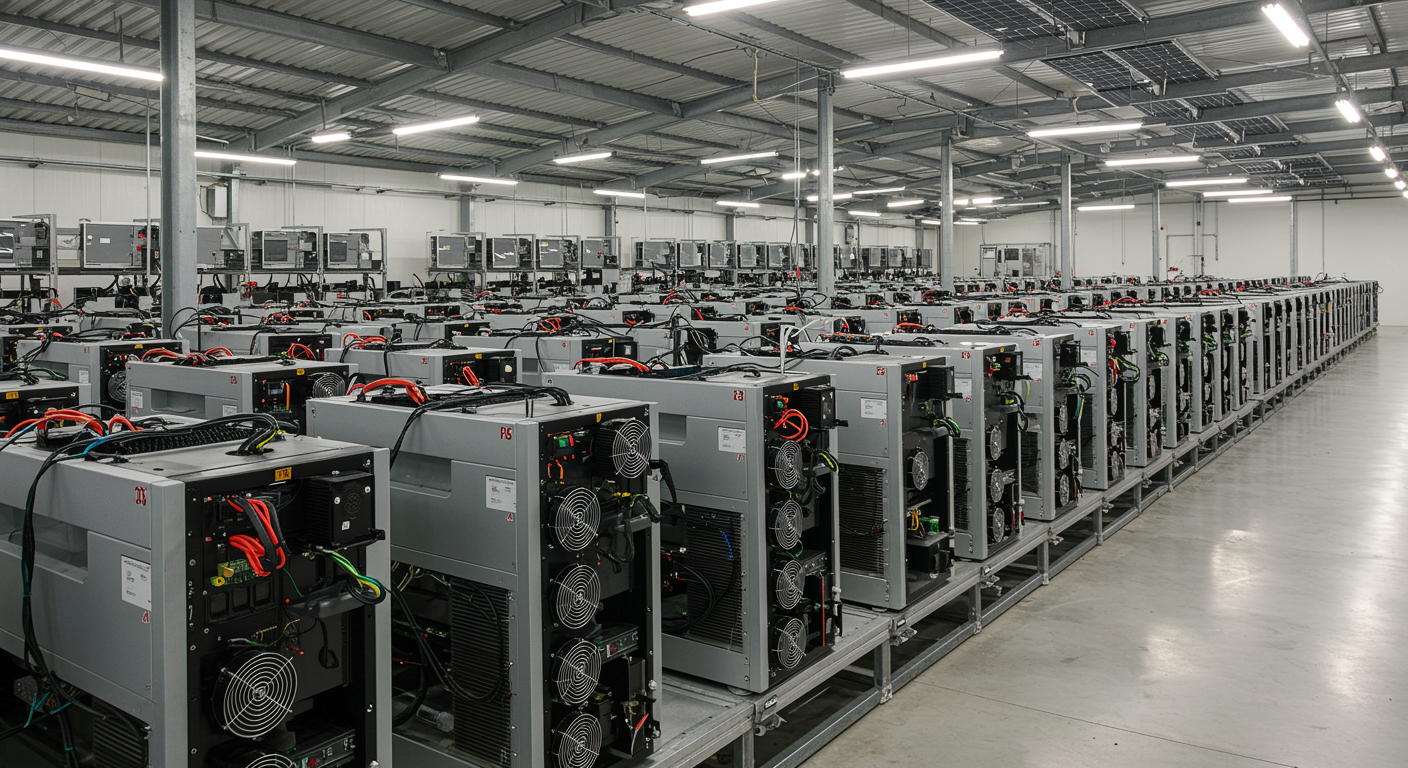
Bitcoin mining stands at a crossroads in 2025, shaped by the halving event that cut block rewards in half, increasing pressure on profit margins across the industry. Rising regulatory scrutiny, environmental mandates, and sustainability requirements are forcing miners to adapt their operations fundamentally. The landscape has shifted dramatically from the Wild West days of cryptocurrency, with profitability, compliance, and environmental responsibility now defining success in the mining ecosystem.
This pivotal year demands strategic thinking as miners navigate reduced rewards, stricter laws, and growing emphasis on green energy adoption. Only those who understand the complex interplay of hardware efficiency, regulatory compliance, and environmental impact will thrive in this transformed market environment.
2025 Bitcoin Mining Profitability: Key Trends and Real Numbers
Bitcoin mining profitability in 2025 varies dramatically across different operational models, with solo miners, large-scale farms, and cloud mining services showing distinct cost structures and return profiles. The post-halving environment has compressed margins significantly, making efficient operations and low electricity costs more critical than ever. Current Q1 2025 data reveals stark differences in break-even points and monthly returns across these mining approaches.
The key variables affecting profitability include Bitcoin’s volatile price movements, which can shift from $40,000 to $70,000 within months, dramatically impacting mining economics. Electricity rates remain the primary operational expense, typically representing 60-80% of total mining costs, while hardware depreciation and network difficulty adjustments add additional complexity to profitability calculations.
Geographic location plays an increasingly important role, with miners in regions offering renewable energy sources and favorable regulations seeing significantly better margins. The consolidation trend continues as smaller, less efficient operations struggle to maintain profitability in the reduced-reward environment.
Market dynamics show that only the most efficient operations with electricity costs below $0.06 per kWh can maintain consistent profitability, while those paying above $0.10 per kWh face regular periods of operating at losses during Bitcoin price downturns.
| Mining Setup | Investment (USD) | Monthly ROI | Payback (months) | Key Variables |
|---|---|---|---|---|
| Home Mining (1 ASIC) | $3,500-$5,000 | 8-15% | 18-24 | Residential electricity, noise, cooling |
| Small Farm (10-50 ASICs) | $75,000-$300,000 | 12-22% | 14-20 | Industrial power rates, facility costs |
| Large Commercial Farm | $5M-$50M+ | 18-28% | 10-16 | Bulk power agreements, economies of scale |
| Cloud Mining Contract | $500-$10,000 | 5-12% | 24-36 | Provider fees, contract terms, fraud risk |
| Hosted Mining | $15,000-$100,000 | 10-18% | 16-22 | Hosting fees, remote management |
Factors Impacting ROI in 2025
The primary drivers of mining profitability have evolved significantly following the 2024 halving, with ASIC performance and energy efficiency becoming make-or-break factors for sustained operations. Understanding these core elements is essential for any mining investment decision in the current market environment.
- ASIC Performance and Efficiency: Next-generation miners achieving 20-25 J/TH power efficiency provide substantial advantages over older models consuming 35+ J/TH, often determining profitability during low Bitcoin price periods.
- Electricity Cost Structure: All-in energy costs including demand charges, power factor penalties, and grid connection fees can vary from $0.03/kWh for renewable sources to $0.15/kWh for residential connections.
- Network Hash Rate Dynamics: Global hash rate fluctuations of 10-20% monthly directly impact individual miner rewards, with difficulty adjustments occurring every 2016 blocks affecting short-term profitability.
- Post-Halving Market Conditions: Reduced block rewards from 6.25 to 3.125 BTC have eliminated margins for inefficient operations, requiring Bitcoin prices above $45,000 for most miners to remain profitable.
- Hardware Depreciation and Lifespan: ASIC miners typically depreciate 20-30% annually, with 3-5 year operational lifespans before becoming economically obsolete due to newer, more efficient models.
- Operational and Maintenance Costs: Hidden expenses including cooling systems, facility rent, insurance, and technical support can add 15-25% to total operational costs beyond electricity consumption.
Profitability Case Study: ASIC vs. Cloud vs. Home Mining
A detailed analysis of three mining approaches reveals distinct risk-reward profiles that cater to different investor types and capital availability. Solo ASIC mining offers the highest potential returns but requires significant technical expertise and upfront capital, with a typical home setup using one Antminer S19 Pro generating $200-400 monthly profit at current Bitcoin prices and $0.08/kWh electricity costs.
Cloud mining presents the lowest barrier to entry but often delivers disappointing returns due to management fees, maintenance charges, and potential fraud risks. Legitimate cloud mining services typically charge 15-25% of gross mining revenue for operational expenses, significantly reducing net returns compared to self-operated equipment. Many contracts become unprofitable during Bitcoin bear markets when mining revenue drops below operational costs.
Large-scale commercial mining operations achieve the best economies of scale through bulk power agreements, efficient cooling systems, and professional management, but require millions in initial investment and sophisticated operational expertise. These facilities often secure power purchase agreements below $0.05/kWh and can negotiate favorable hardware pricing, creating sustainable competitive advantages that individual miners cannot match.
Regulatory Landscape: 2025 Developments and Compliance
The regulatory environment for Bitcoin mining has matured significantly in 2025, with comprehensive federal frameworks emerging alongside state-specific approaches that vary dramatically across jurisdictions. The Biden administration’s continued focus on environmental impact has led to proposed emissions reporting requirements for large-scale mining operations, while the Treasury Department has strengthened Know Your Customer (KYC) and Anti-Money Laundering (AML) requirements for mining pools and service providers.
Federal agencies including the EPA, FERC, and Treasury have established coordinated oversight mechanisms that require mining operations above certain thresholds to register and report energy consumption, emissions data, and financial transactions. These regulations particularly impact facilities consuming more than 5 MW of power, which must now comply with industrial-level environmental monitoring and reporting standards similar to traditional manufacturing operations.
International regulatory developments have created both opportunities and challenges for U.S.-based miners, with the European Union’s Markets in Crypto-Assets (MiCA) regulation influencing global standards and China’s continued mining ban redirecting hash rate to more mining-friendly jurisdictions. Many countries are implementing carbon border adjustments that could affect the competitiveness of Bitcoin mined using fossil fuel energy sources.
The most contested areas remain around proof-of-work energy consumption, with ongoing debates about potential restrictions or taxes on energy-intensive mining operations. Several bills in Congress propose various approaches ranging from carbon taxes on mining to outright bans in certain regions, creating regulatory uncertainty that affects long-term investment planning for mining operations.
State-by-State Regulatory Approaches and Incentives
State-level mining regulations create a patchwork of opportunities and restrictions that significantly impact where mining operations can profitably establish and expand. Mining-friendly states like Wyoming and Texas have implemented comprehensive legal frameworks that provide regulatory clarity and economic incentives, while restrictive jurisdictions like New York have effectively banned most mining activities through environmental regulations and moratoriums.
The regulatory landscape continues evolving as states balance economic development opportunities from mining investments against environmental concerns and grid stability issues. Some states offer significant tax incentives and streamlined permitting processes to attract mining investments, while others impose additional fees and regulatory burdens that make operations economically unviable.
| State | Legal Status | Energy Policies | Tax/Permitting Incentives | Restrictions |
|---|---|---|---|---|
| Wyoming | Fully Legal | Abundant wind/coal, grid priority | 0% corporate tax, fast permitting | None significant |
| Texas | Fully Legal | Deregulated market, renewable growth | Economic development zones | Grid stability requirements |
| New York | Heavily Restricted | Proof-of-work moratorium | None for mining | 2-year mining ban, emissions limits |
| Montana | Legal with Conditions | Coal-heavy grid, cheap power | Property tax exemptions | Environmental impact studies |
| Washington | Legal with Limits | Hydroelectric dominated | Renewable energy credits | Utility approval required |
| Kentucky | Fully Legal | Coal transition, low rates | Tax incentives for tech investment | Local zoning requirements |
| California | Restricted | Renewable mandates, high costs | None for mining | Carbon compliance, peak demand limits |
The Renewable Energy Shift: How Green Is Mining in 2025?
The global Bitcoin mining industry has undergone a dramatic transformation toward renewable energy adoption, with sustainability becoming both an economic imperative and regulatory requirement across major mining jurisdictions. Leading mining regions like Iceland, Norway, and parts of the United States have achieved renewable energy penetration rates exceeding 60% for mining operations, driven by abundant hydroelectric, geothermal, and wind resources that offer both environmental benefits and cost advantages.
Power purchase agreements (PPAs) have become the preferred mechanism for large-scale mining operations to secure long-term renewable energy contracts, often at rates 20-40% below grid electricity prices. These agreements provide price stability over 10-20 year terms while enabling mining companies to claim carbon-neutral operations, which has become increasingly important for institutional investment and regulatory compliance.
The carbon impact of Bitcoin mining continues declining as operations migrate to cleaner energy sources, with the Bitcoin Mining Council reporting that sustainable energy usage in mining has increased from approximately 36% in 2021 to over 58% in 2025. Notable projects include solar-powered mining farms in Texas utilizing battery storage, hydroelectric facilities in Quebec and Washington state, and geothermal-powered operations in Iceland and El Salvador.
Geographic concentration of mining hash rate has shifted significantly toward regions with abundant renewable resources, creating new mining hubs in locations like Paraguay, Costa Rica, and northern Europe. This transition has been accelerated by regulatory pressures in traditional mining regions and the economic advantages of low-cost renewable energy sources.
Despite significant progress, challenges remain in fully decarbonizing Bitcoin mining, particularly in regions where renewable energy isn’t consistently available and grid-scale battery storage remains expensive. The intermittent nature of solar and wind power requires mining operations to either invest in storage solutions or maintain grid connections that may include fossil fuel generation during peak demand periods.
| Region | Renewables Share (%) | Major Sources | Price Advantage | Notable Projects |
|---|---|---|---|---|
| Iceland | 95% | Geothermal, Hydro | $0.03-0.05/kWh | Genesis Mining, Bitfury facilities |
| Norway | 88% | Hydroelectric | $0.04-0.06/kWh | Kryptovault, Northern Bitcoin |
| Texas, USA | 65% | Wind, Solar | $0.03-0.08/kWh | Riot Blockchain, Marathon Digital |
| Quebec, Canada | 92% | Hydroelectric | $0.04-0.07/kWh | Bitfarms, Hive Blockchain |
| Paraguay | 85% | Hydroelectric | $0.02-0.05/kWh | Digital Mining Group, Penguin Infrastructure |
Environmental Impact: Progress and Remaining Challenges
The environmental profile of Bitcoin mining has improved substantially through renewable energy adoption and efficiency gains, yet significant challenges persist in achieving complete carbon neutrality. The industry’s progress toward sustainability creates both opportunities for responsible mining operations and ongoing scrutiny from environmental advocates and regulators.
- Carbon Intensity Reduction: Mining operations using renewable energy have achieved 70-90% lower carbon emissions compared to coal-powered facilities, with some geothermal and hydroelectric operations approaching carbon neutrality including manufacturing emissions.
- Grid Stabilization Benefits: Mining operations provide demand response services and grid balancing, particularly for renewable energy systems, by consuming excess power during peak generation and shutting down during grid stress events.
- Stranded Energy Utilization: Miners increasingly utilize otherwise wasted energy sources including flare gas, excess hydroelectric capacity during high water periods, and curtailed wind/solar power that would otherwise be discarded.
- E-Waste and Hardware Lifecycle: ASIC miners create substantial electronic waste every 3-5 years as newer, more efficient models are released, with limited recycling infrastructure for specialized mining hardware components.
- Water Usage in Cooling Systems: Large-scale mining facilities require significant water resources for cooling, particularly in arid regions where renewable energy is abundant but water is scarce, creating resource allocation conflicts.
- Grid Infrastructure Stress: Rapid scaling of mining operations can strain local electrical infrastructure, requiring substantial grid investments and potentially affecting power availability for residential and commercial users.
Emerging Solutions: AI and Infrastructure for Green Mining
Artificial intelligence and advanced infrastructure technologies are revolutionizing mining operations’ environmental efficiency through predictive analytics that optimize energy consumption, automated systems that match mining intensity to renewable energy availability, and smart cooling solutions that reduce overall power requirements. These AI-driven systems can automatically modulate mining operations based on real-time renewable energy production, maximizing green energy utilization while maintaining profitability.
Mobile and modular mining solutions are gaining traction as operators seek to follow renewable energy resources seasonally, with containerized mining units that can be quickly deployed near hydroelectric facilities during high water periods or relocated to solar installations during peak generation seasons. Advanced cooling technologies including immersion cooling and direct liquid cooling systems are reducing power consumption by 10-15% compared to traditional air cooling methods while enabling higher-density installations in smaller footprints.
Post-Halving Market Dynamics: Hashrate, Competition, and Survival
The 2024 Bitcoin halving has fundamentally reshaped mining economics, creating a survival-of-the-fittest environment where only the most efficient operations can maintain profitability at current reward levels. The immediate aftermath saw approximately 15-20% of global hash rate temporarily go offline as less efficient miners became unprofitable, though much of this capacity has since returned as Bitcoin prices recovered and operations optimized their efficiency.
Market consolidation has accelerated dramatically, with publicly traded mining companies acquiring distressed assets from smaller operators who couldn’t adapt to the reduced reward structure. This consolidation trend has created opportunities for well-capitalized miners to expand operations at discounted prices while eliminating less efficient competition from the network.
The halving’s impact extends beyond immediate profitability concerns, forcing mining companies to evolve their business models toward diversification, including high-performance computing services, grid stabilization contracts, and hosting services for other miners. These revenue streams help offset the reduced Bitcoin mining income while utilizing existing infrastructure investments.
Long-term market dynamics suggest that mining will increasingly concentrate among professional operations with access to cheap renewable energy, advanced cooling systems, and economies of scale that individual miners cannot achieve. This professionalization of mining creates higher barriers to entry while improving overall network efficiency and sustainability.
- Block Reward Reduction Impact: The halving from 6.25 to 3.125 BTC per block immediately cut gross mining revenue in half, forcing widespread operational optimization and eliminating profit margins for miners with electricity costs above $0.08/kWh.
- Hash Rate Network Adjustments: Global hash rate fluctuations of 15-25% following the halving created difficulty adjustment periods where remaining miners experienced temporary profitability increases as less efficient competitors went offline.
- Small Miner Exodus and Consolidation: Individual and small-scale miners lacking economies of scale have been systematically priced out of the market, with their hash rate being absorbed by larger, more efficient commercial operations.
- Business Model Evolution: Mining companies have diversified into hosting services, AI computing, and grid services to maintain revenue streams, with some operations generating 20-30% of revenue from non-mining activities.
- Capital Efficiency Requirements: Post-halving economics demand maximum hardware utilization rates above 95% uptime, sophisticated energy management systems, and operational excellence that many amateur mining operations cannot sustain.
- Geographic Hash Rate Migration: Mining capacity continues concentrating in regions with regulatory clarity, renewable energy access, and favorable tax treatment, creating mining hubs in specific geographic clusters rather than distributed operations.
Profitability Strategies for Small and Large Miners
Small-scale miners must focus on ultra-low electricity costs, typically requiring residential solar installations with battery storage or relocation to regions with subsidized renewable energy to achieve break-even operations in the post-halving environment. Many successful small miners have formed cooperatives to negotiate better hardware pricing and share technical expertise, while others have pivoted to specialized niches like heating applications where mining heat provides additional value.
Large-scale mining operations leverage economies of scale through bulk power purchase agreements, sophisticated cooling and automation systems, and diversified revenue streams that include hosting services for other miners and high-performance computing contracts. These operations increasingly function as energy companies that happen to mine Bitcoin, using their infrastructure for multiple revenue-generating activities including grid stabilization services and excess renewable energy consumption.
The most successful mining operations across all scales have implemented comprehensive cost control measures, including predictive maintenance programs that minimize downtime, energy management systems that automatically optimize for electricity rates and Bitcoin prices, and strategic hardware refresh cycles that maximize the productive lifespan of mining equipment. Financial diversification through Bitcoin treasury management, derivatives hedging, and alternative revenue streams has become essential for long-term survival in the volatile post-halving market environment.
Bitcoin Mining Hardware 2025: Devices, Efficiency and ROI
The Bitcoin mining hardware landscape in 2025 is dominated by next-generation ASIC miners that achieve unprecedented efficiency levels, with leading models from manufacturers like Bitmain, MicroBT, and Canaan delivering hash rates between 100-200 TH/s while consuming 20-30 J/TH. These efficiency improvements are crucial for maintaining profitability in the post-halving environment, as older generation miners consuming 35+ J/TH have largely become economically obsolete except in regions with extremely cheap electricity.
Hardware pricing has stabilized compared to the extreme volatility of previous years, though lead times for the most efficient models can extend 3-6 months during high-demand periods. The secondary market for used mining equipment has become more sophisticated, with established dealers and warranty programs that provide alternatives to new equipment purchases for budget-conscious operations.
Return on investment calculations for mining hardware must now factor in shorter profitability windows due to rapid technological advancement and increasing network difficulty. The most efficient current-generation miners typically achieve ROI within 12-18 months under favorable conditions, but this timeline can extend significantly during Bitcoin bear markets or in high-electricity-cost environments.
Cloud mining and hosting services have expanded to accommodate miners who want hardware ownership without operational complexity, though these services typically charge 15-25% of gross mining revenue for management, electricity, and facility costs. The trade-off between convenience and profitability makes hosted solutions more attractive for smaller investors who lack technical expertise or suitable facilities for mining operations.
| Model | Hashrate (TH/s) | Power Efficiency (J/TH) | Approx. Cost | ROI Range (months) |
|---|---|---|---|---|
| Bitmain S21 Pro | 234 | 15.0 | $6,800-$7,500 | 12-16 |
| MicroBT M60S++ | 186 | 16.5 | $5,200-$5,800 | 14-18 |
| Canaan A1466 | 150 | 18.5 | $4,200-$4,800 | 16-22 |
| Bitmain S19 XP | 140 | 21.5 | $3,500-$4,200 | 18-24 |
| MicroBT M50S++ | 126 | 26.0 | $2,800-$3,400 | 20-28 |
| Bitmain S19 Pro | 110 | 29.5 | $2,200-$2,800 | 22-32 |
| Home Mining Unit | 14-20 | 35-50 | $800-$1,500 | 36-60 |
Choosing the Right Mining Equipment: Key Considerations
Selecting optimal mining hardware requires balancing upfront costs, operational efficiency, and long-term profitability projections based on your specific operational environment and investment timeline. The decision framework should prioritize power efficiency over raw hash rate in most scenarios, as electricity costs typically represent 60-80% of total operational expenses.
- Warranty and Support Coverage: Prioritize manufacturers offering comprehensive warranties of 12+ months and established service networks, as hardware failures can eliminate months of mining revenue and replacement costs can be substantial.
- Resale Value and Market Liquidity: Consider the secondary market demand for specific models, as leading brands like Bitmain typically retain 40-60% of original value after 2-3 years compared to lesser-known manufacturers.
- Power Infrastructure Compatibility: Ensure your electrical system can handle the power requirements and heat generation, as most industrial miners require 220V+ connections and substantial cooling capacity.
- Procurement Timing and Market Cycles: Hardware prices fluctuate 30-50% based on Bitcoin prices and manufacturing cycles, making strategic purchasing during market downturns crucial for maximizing ROI.
- Future-Proofing and Technology Roadmaps: Evaluate manufacturer roadmaps for next-generation efficiency improvements, as rapid technological advancement can quickly obsolete current-generation equipment.
Home Mining vs. Commercial Operations in 2025
Home mining operations face significant constraints in the post-halving environment, with residential electricity rates typically 2-3x higher than industrial rates and practical limitations on heat dissipation and noise levels that restrict equipment choices to lower-efficiency models. Most home miners must rely on specialized quiet miners or alternative heating applications to justify operations, as traditional ASIC miners generate 75+ decibels of noise and substantial heat that can be problematic in residential settings.
Commercial mining operations benefit from economies of scale in every aspect of the business, from bulk hardware purchasing discounts of 10-20% to industrial electricity rates below $0.05/kWh and professional-grade cooling and monitoring systems that maximize uptime and efficiency. These operations can also implement sophisticated strategies like demand response programs, power factor optimization, and predictive maintenance that are impractical for home miners but provide significant competitive advantages in the current market environment.
Cloud Mining and New Business Models: Scaling and Risks
The cloud mining landscape has evolved significantly in 2025, with legitimate providers offering more transparent pricing structures and verifiable hash rate allocation, though the industry remains plagued by fraudulent schemes that promise unrealistic returns. Established cloud mining services typically charge 15-25% of gross mining revenue for management fees, electricity, and maintenance, which significantly reduces net returns compared to self-operated equipment but eliminates technical complexity and infrastructure requirements.
Colocation services have gained popularity as a middle-ground approach, allowing miners to own their hardware while benefiting from professional facility management, bulk electricity rates, and optimal operating conditions. These services typically charge $0.06-0.12 per kWh all-in costs plus monthly hosting fees of $20-50 per ASIC unit, depending on the facility location and service level.
New business models emerging in 2025 include mining-as-a-service platforms that provide comprehensive mining solutions including hardware financing, facility management, and revenue optimization, targeting institutional investors who want Bitcoin mining exposure without operational complexity. Some innovative approaches include revenue-sharing agreements where facility operators and equipment owners split mining proceeds based on predetermined formulas that align incentives between parties.
| Model | Upfront Cost | Expected Return | Flexibility | Risk Profile |
|---|---|---|---|---|
| Cloud Mining Contract | $500-$10,000 | 5-12% annually | Low – fixed contracts | High – counterparty risk |
| Colocation Hosting | $3,000-$8,000 | 8-18% annually | Medium – own equipment | Medium – operational risk |
| Self-Operated Mining | $5,000-$15,000 | 10-25% annually | High – full control | Medium – technical risk |
| Mining Pool Investment | $1,000-$50,000 | 6-15% annually | Low – pooled resources | Medium – shared risk |
| Mining Fund/REIT | $10,000-$100,000+ | 4-12% annually | Low – professional management | Lower – diversification |
Cloud Mining vs. Traditional: Pros and Cons
Cloud mining and traditional self-operated mining represent fundamentally different approaches to Bitcoin mining investment, each with distinct advantages and disadvantages that suit different investor profiles and risk tolerances. Understanding these trade-offs is essential for making informed decisions about mining participation in the current market environment.
- Cloud Mining Advantages: No technical expertise required, no hardware maintenance, lower barriers to entry with contracts starting under $1,000, and elimination of noise, heat, and facility requirements that make mining accessible to residential investors.
- Cloud Mining Disadvantages: Higher total costs due to management fees, limited control over operations, counterparty risk including potential fraud, and typically lower net returns compared to efficient self-operated mining.
- Traditional Mining Advantages: Full control over operations and optimization, higher potential returns through direct ownership, ability to sell hardware and recover partial investment, and transparency in actual mining operations and costs.
- Traditional Mining Disadvantages: Substantial technical knowledge required, significant upfront capital investment, ongoing maintenance and operational responsibilities, and risks from hardware failures, electricity rate changes, and facility issues.
- Risk Profile Differences: Cloud mining concentrates risk in counterparty relationships and contract terms, while traditional mining distributes risk across technical operations, market conditions, and hardware performance factors.
Taxation, Reporting, and Financial Management
Bitcoin mining taxation in 2025 requires comprehensive record-keeping and reporting across multiple categories, with mined Bitcoin treated as ordinary income at fair market value on the date of receipt, while subsequent sales create capital gains or losses based on the holding period and price differences. The IRS has strengthened enforcement of cryptocurrency reporting requirements, with Form 8949 and Schedule D filings mandatory for all mining activities regardless of scale.
Mining business expenses including electricity, hardware depreciation, facility costs, and maintenance can be deducted against mining income, but proper documentation and business structure are essential for claiming these deductions. Professional mining operations often establish LLC or corporate structures to optimize tax treatment and limit personal liability, while home miners may qualify for business expense deductions if mining constitutes a legitimate profit-seeking activity.
International tax implications have become increasingly complex, with many countries implementing specific cryptocurrency mining regulations and reporting requirements that vary significantly across jurisdictions. U.S. miners with foreign operations or those mining through international services must navigate additional reporting requirements including FBAR filings and potential double taxation issues.
- Income Recognition Requirements: All mined Bitcoin must be reported as income at fair market value on the date of mining, requiring detailed daily records of mining rewards, Bitcoin prices, and USD equivalent values for tax calculation purposes.
- Business Expense Deductions: Legitimate mining operations can deduct electricity costs, hardware depreciation using MACRS schedules, facility rent, cooling costs, internet services, and professional fees as ordinary business expenses against mining income.
- Depreciation and Asset Management: ASIC mining equipment qualifies for accelerated depreciation under Section 179 or bonus depreciation rules, allowing immediate expensing of up to $1.16 million in equipment purchases for qualifying businesses.
- Quarterly Estimated Tax Payments: Profitable mining operations must make quarterly estimated tax payments to avoid underpayment penalties, requiring careful cash flow management to ensure adequate liquidity for tax obligations.
- State and Local Tax Variations: Mining tax treatment varies significantly across states, with some offering favorable tax treatment for technology businesses while others impose additional taxes on cryptocurrency activities or energy-intensive operations.
- International Compliance Requirements: Miners with foreign operations, cloud mining contracts, or cryptocurrency held on foreign exchanges must comply with additional reporting requirements including FBAR, Form 8938, and potentially Form 3520 filings.
Recordkeeping and Reporting Tools for Miners
Professional mining operations require sophisticated accounting systems that track mining rewards, expenses, hardware depreciation, and cryptocurrency transactions across multiple exchanges and wallets. Specialized software solutions like CoinTracker, Koinly, and TaxBit have developed mining-specific features that automatically import pool payouts, calculate fair market values, and generate tax forms, though manual verification remains essential for accuracy.
Comprehensive recordkeeping should include daily mining reward logs with timestamp and fair market value data, detailed expense tracking with supporting documentation, hardware purchase and depreciation schedules, electricity usage and cost allocation records, and complete transaction histories for all cryptocurrency sales or exchanges. Many mining operations engage specialized cryptocurrency CPAs who understand the unique tax implications and can provide ongoing compliance guidance and strategic tax planning advice.
Common Financial and Legal Pitfalls
Mining operations frequently encounter tax and legal complications that can result in significant penalties, audit triggers, and compliance issues that are easily avoidable with proper planning and professional guidance. Understanding these common pitfalls helps miners implement appropriate safeguards and maintain compliance with evolving regulations.
- Inadequate Record Keeping: Failure to maintain detailed daily mining records, expense documentation, and cryptocurrency transaction logs frequently leads to audit issues and inability to substantiate deductions or properly calculate tax obligations.
- Mixing Personal and Business Expenses: Home miners often improperly allocate household electricity costs or claim excessive home office deductions without proper business justification, creating audit risks and potential penalty exposure.
- Ignoring State and Local Regulations: Many miners overlook local business licensing requirements, zoning restrictions, or state-specific cryptocurrency regulations that can result in fines, cease and desist orders, or operational shutdowns.
- Underestimating Tax Liabilities: Miners frequently fail to set aside adequate funds for tax obligations, particularly during Bitcoin bull markets, leading to cash flow crises when tax payments become due and Bitcoin prices have declined.
Future Outlook: Technical, Market, and Policy Scenarios
The future of Bitcoin mining through 2030 will be shaped by accelerating technological advancement, evolving regulatory frameworks, and market dynamics that increasingly favor professional, sustainable operations over individual mining efforts. Next-generation ASIC technology promises continued efficiency improvements of 15-25% annually, while manufacturing capacity constraints and geopolitical factors may create periodic hardware shortages and price volatility that impact mining economics.
Policy trends point toward increasing environmental scrutiny and potential carbon taxation or cap-and-trade systems that could fundamentally alter mining economics, particularly for operations using fossil fuel energy sources. The growing institutional adoption of Bitcoin creates pressure for mining operations to demonstrate environmental responsibility and regulatory compliance, potentially leading to premium pricing for “green” Bitcoin produced using renewable energy sources.
Market evolution suggests continued consolidation among mining operators, with publicly traded companies and institutional investors increasingly dominating hash rate distribution while individual miners are relegated to niche applications or hobbyist activities. The integration of mining operations with renewable energy development projects and grid stabilization services represents a potential pathway for the industry to achieve broader social acceptance and economic sustainability beyond pure cryptocurrency rewards.
Key Milestones to Watch Through 2030
Several critical developments will determine the trajectory of Bitcoin mining over the next five years, with implications for profitability, regulation, and technological evolution that miners must monitor and adapt to for long-term success.
- 2026: Next-Generation ASIC Technology: Introduction of sub-10 J/TH miners using advanced semiconductor nodes will create another efficiency leap, potentially obsoleting current-generation equipment and reshuffling mining competitiveness.
- 2027: Federal Carbon Regulation Implementation: Anticipated federal carbon pricing or emissions reporting requirements for large energy consumers will likely include Bitcoin mining operations, fundamentally altering cost structures and competitive dynamics.
- 2028: Fourth Bitcoin Halving Event: Block rewards will decrease to 1.5625 BTC, requiring Bitcoin prices above $80,000-100,000 for most current mining operations to remain profitable at 2025 efficiency levels.
- 2029: Renewable Energy Grid Integration: Widespread deployment of grid-scale battery storage and smart grid technologies will enable more sophisticated demand response mining operations that optimize for renewable energy availability and grid stabilization services.
- 2030: Mining Industry Maturation: Complete professionalization of mining with institutional operators controlling 80%+ of global hash rate, standardized environmental reporting, and potential regulatory requirements for mining operator licensing and compliance.