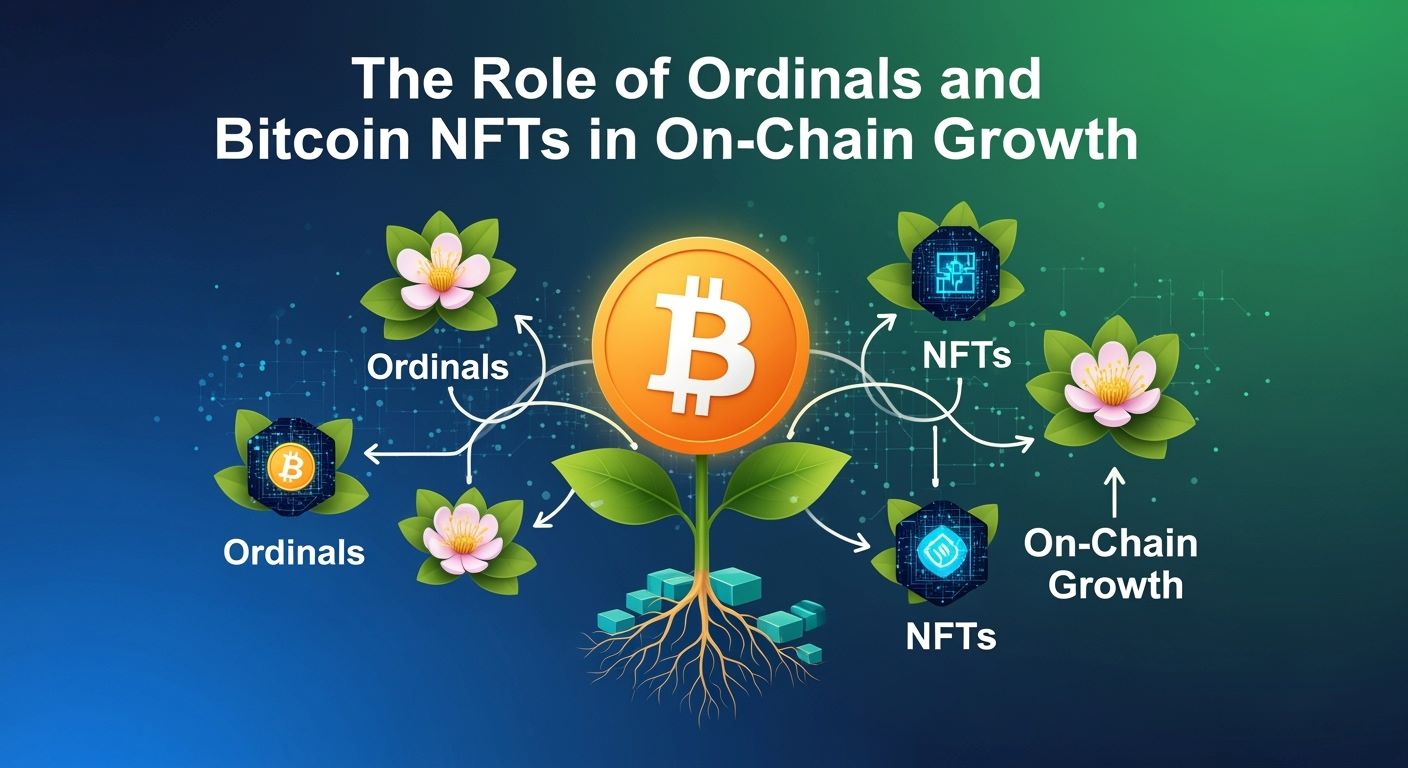
The emergence of Ordinals and Bitcoin NFTs represents one of the most significant developments in Bitcoin’s ecosystem since the implementation of major protocol upgrades. These digital artifacts have catalyzed unprecedented on-chain growth, transforming how users interact with the Bitcoin network and challenging traditional perspectives on the blockchain’s primary purpose. By leveraging technological advances like SegWit and Taproot, Ordinals have unlocked new possibilities for storing and trading digital collectibles directly on Bitcoin’s base layer.
The Ordinals protocol fundamentally differs from traditional NFT implementations on Ethereum and Solana by inscribing data directly onto individual satoshis, creating fully on-chain digital artifacts rather than relying on external metadata or certificate models. This innovation has sparked intense debate within the Bitcoin community, balancing themes of utility expansion against concerns about network congestion and philosophical purity. The controversy surrounding Bitcoin NFTs reflects broader tensions between preserving Bitcoin’s core monetary function and embracing technological innovation that expands its use cases.
Ordinals and the Foundations of Bitcoin NFTs
The Ordinals protocol revolutionizes Bitcoin by introducing a numbering system for individual satoshis, enabling the creation of unique digital artifacts through data inscription. This system assigns ordinal numbers to satoshis based on the order they were mined, creating a traceable lineage for each unit. By inscribing arbitrary data onto these numbered satoshis, users can create digital collectibles that exist entirely on-chain, leveraging Bitcoin’s immutable ledger for permanent storage.
The fundamental distinction between Bitcoin’s fully on-chain approach and traditional certificate-based NFT models represents a paradigm shift in digital ownership verification. While Ethereum and Solana NFTs typically store metadata on external servers or IPFS networks, Ordinals embed complete data directly into Bitcoin transactions. This approach ensures true decentralization and eliminates dependencies on external infrastructure, though it comes with trade-offs in terms of file size limitations and transaction costs.
The enabling technologies behind Ordinals include the SegWit upgrade, which separated transaction signatures from transaction data, and the Taproot upgrade, which introduced more efficient script execution and privacy features. These improvements created the technical foundation necessary for data inscription while maintaining network security and efficiency. The combination of witness data capacity and script flexibility opened new possibilities for embedding complex data structures within Bitcoin transactions.
| Feature | Ordinals NFTs (Bitcoin) | Traditional NFTs (Ethereum/Solana) |
|---|---|---|
| Data Storage | Fully on-chain inscription | External metadata with on-chain certificate |
| Immutability | Complete permanence via Bitcoin blockchain | Dependent on external storage reliability |
| File Size Limits | Constrained by block space economics | More flexible through off-chain storage |
| Transaction Costs | Higher due to data inscription fees | Lower minting costs, separate storage costs |
How Ordinals Work: Technical and Structural Insights
The inscription process begins with selecting a specific satoshi and attaching arbitrary data through a two-step transaction mechanism. First, the satoshi is sent to a Taproot output, creating a commitment to the inscription data. Second, the inscription content is revealed when the satoshi is spent, permanently embedding the data in Bitcoin’s transaction history.
Satoshi tracking relies on a first-in, first-out principle for transaction inputs and outputs, ensuring consistent identification of specific units across transfers. This tracking system enables the creation of provable digital artifacts with clear ownership chains, though it requires specialized indexing software to interpret and display the associated content.
Data permanence on Bitcoin provides unparalleled security for digital collectibles, as the inscribed content becomes part of the immutable blockchain record. Unlike traditional NFTs that may face broken links or server failures, Ordinals maintain their integrity as long as the Bitcoin network operates, creating truly permanent digital artifacts.
The Evolution from Colored Coins to Digital Artifacts
Ordinals represent the latest evolution in Bitcoin’s journey toward supporting digital assets, building upon earlier experiments like Colored Coins that attempted to create unique tokens on the network. These early protocols faced limitations in data storage and required complex interpretation layers that hindered widespread adoption.
The progression from Rare Pepes on Counterparty to Spells of Genesis demonstrated growing interest in Bitcoin-based digital collectibles, though these implementations relied on secondary protocols and external data storage. Each iteration improved upon previous limitations while highlighting the need for more elegant on-chain solutions.
Ordinals succeed where previous attempts struggled by leveraging native Bitcoin script capabilities rather than requiring additional protocol layers. This approach creates digital artifacts that are indistinguishable from regular Bitcoin transactions at the protocol level, ensuring compatibility with existing infrastructure while enabling new use cases.
Key Innovations and Ecosystem Upgrades
The technical foundation enabling Ordinals encompasses several critical Bitcoin upgrades that expanded the network’s capacity for data storage and script execution. These improvements collectively created the infrastructure necessary for practical NFT implementation without compromising Bitcoin’s core security model.
Network capacity enhancements through SegWit and Taproot not only increased transaction throughput but also provided new mechanisms for embedding data within transactions. The expanded utility extends beyond simple value transfer to encompass complex data structures and programmable functionality.
- SegWit Implementation: Separated signature data from transaction content, creating additional space for data inscription while maintaining backward compatibility with existing Bitcoin infrastructure.
- Taproot Activation: Introduced more efficient script execution and enhanced privacy features that enable complex inscription transactions with reduced on-chain footprint.
- Inscription Protocol: Developed standardized methods for embedding arbitrary data within Bitcoin transactions using witness data and script execution capabilities.
- BRC-20 Token Standard: Created fungible token functionality on Bitcoin through JSON inscriptions, enabling new categories of digital assets beyond collectibles.
- Runes Protocol: Proposed more efficient token standards that optimize for Bitcoin’s UTXO model while maintaining full on-chain functionality.
Impact on Bitcoin Infrastructure and Tools
The emergence of Ordinals has catalyzed rapid development of specialized infrastructure to support NFT creation, trading, and management on Bitcoin. This ecosystem expansion demonstrates the network’s adaptability and the community’s innovation capacity when presented with new use cases.
- Specialized Wallet Development: New Bitcoin wallets emerged with Ordinals support, featuring inscription capabilities and digital artifact management alongside traditional transaction functionality.
- Blockchain Explorer Enhancement: Existing explorers added Ordinals visualization features while new platforms focused specifically on browsing and analyzing Bitcoin NFT activity and ownership patterns.
- Indexing Infrastructure Creation: Dedicated indexing services developed to track satoshi movements and inscription data, providing APIs for applications to access Ordinals metadata efficiently.
- Marketplace Platform Launch: Trading platforms specifically designed for Bitcoin NFTs emerged, facilitating price discovery and liquidity for digital artifacts with Bitcoin-native settlement.
- Development Tool Integration: Programming libraries and frameworks incorporated Ordinals functionality, lowering technical barriers for developers building NFT applications on Bitcoin.
Economic Impact: Fees, Incentives, and Miner Revenue
The introduction of Ordinals has fundamentally altered Bitcoin’s fee market dynamics, creating new revenue streams for miners while intensifying competition for block space. Transaction fee surges during peak NFT activity periods have demonstrated the protocol’s ability to generate significant miner income beyond block rewards.
Post-halving economics become increasingly critical as block rewards diminish over time, making fee-based revenue essential for long-term network security. Ordinals activity has provided substantial evidence that diverse use cases can sustain miner incentives through market-driven fee mechanisms.
Network activity metrics reveal dramatic increases in transaction volume, average fees, and total miner revenue during Ordinals adoption waves. These trends suggest that NFT functionality can serve as an economic bridge supporting mining operations as Bitcoin approaches its maximum supply cap.
| Economic Impact Factor | Pre-Ordinals | Post-Ordinals |
|---|---|---|
| Average Daily Fees | $200,000-$500,000 | $2,000,000-$8,000,000 during peaks |
| Block Space Utilization | 60-80% capacity usage | 95-100% sustained utilization |
| Miner Revenue Sources | 95% block rewards, 5% fees | 85% block rewards, 15% fees |
| Transaction Priorities | Primarily payment transactions | Mixed payments, inscriptions, trading |
| Fee Market Complexity | Predictable, cycle-based patterns | Volatile, demand-driven spikes |
How NFT Activity Affects Blockspace Economics
Competition for Bitcoin block space has intensified as NFT inscriptions compete directly with traditional payment transactions for inclusion in blocks. This dynamic creates a natural fee market where users must bid higher fees during periods of high Ordinals activity, leading to temporary congestion for regular Bitcoin transfers.
The economic efficiency of block space allocation improves as diverse transaction types compete based on their respective value propositions. NFT creators and traders demonstrate willingness to pay premium fees for permanent on-chain storage, while routine payments may defer to periods of lower activity or migrate to Layer 2 solutions.
Long-Term Sustainability for Miners
Mining sustainability increasingly depends on fee revenue as block reward halvings reduce the primary income source for network validators. Ordinals have demonstrated that expanded utility can generate substantial fee income, potentially filling the gap left by diminishing block rewards.
The diversity of transaction types creates more resilient revenue streams for miners, reducing dependence on pure monetary transactions. This economic diversification may prove crucial for maintaining network security as Bitcoin approaches its 21 million coin limit and transitions to a fee-based security model.
Long-term projections suggest that sustained NFT and token activity could provide the economic foundation necessary to support Bitcoin’s security budget through transaction fees alone. However, this outcome depends on continued innovation in use cases and user adoption of on-chain applications.
Controversy and Debate: Core Values vs. Innovation
The Bitcoin community remains deeply divided over Ordinals, with debates centering on fundamental questions about the network’s intended purpose and optimal use cases. Traditional Bitcoin maximalists argue that non-monetary transactions compromise the network’s efficiency as a payment system and store of value.
Philosophical tensions emerge between preserving Bitcoin’s original vision as peer-to-peer electronic cash and embracing technological capabilities that enable broader applications. These debates reflect deeper questions about protocol evolution, governance, and the balance between innovation and stability.
Network utilization trade-offs highlight the competing demands of different user groups, with payment users seeking low fees and fast confirmation while NFT creators prioritize permanent storage and artistic expression. The resolution of these tensions will likely shape Bitcoin’s long-term development trajectory.
- Censorship Resistance Benefits: Ordinals enhance Bitcoin’s censorship resistance by demonstrating the protocol’s neutrality toward transaction content and its ability to preserve arbitrary data permanently.
- Monetary Purity Concerns: Critics argue that non-monetary transactions dilute Bitcoin’s core value proposition and may undermine its effectiveness as sound money through increased complexity.
- Network Congestion Issues: High NFT activity periods create fee spikes that price out smaller payment transactions, potentially limiting Bitcoin’s accessibility for routine financial use.
- Innovation Acceleration: Ordinals development has spurred rapid innovation in Bitcoin infrastructure, wallets, and applications, demonstrating the ecosystem’s capacity for rapid adaptation.
- Economic Security Enhancement: Increased fee revenue from diverse use cases strengthens network security by providing miners with additional income streams beyond block rewards.
Community Responses: From Support to Backlash
Supportive community members view Ordinals as a natural evolution of Bitcoin’s capabilities, arguing that any transaction willing to pay network fees deserves equal treatment. They emphasize the importance of permissionless innovation and the benefits of increased utility for network security.
- Pro-Innovation Arguments: Supporters stress that Bitcoin’s value lies in its immutable, censorship-resistant properties, which benefit all use cases equally without discrimination based on transaction purpose.
- Technical Appreciation: Developer communities often appreciate the elegant technical implementation of Ordinals, which uses existing Bitcoin functionality without requiring protocol changes or additional consensus rules.
- Economic Benefits Recognition: Mining community segments welcome the additional fee revenue generated by NFT activity, viewing it as crucial for long-term network sustainability.
- Anti-Innovation Resistance: Bitcoin purists advocate for limiting network use to monetary transactions, arguing that other applications compromise efficiency and increase costs for legitimate financial use.
- Spam Transaction Concerns: Critics label NFT inscriptions as “spam” that clogs the network and prevents Bitcoin from achieving its primary mission as global money.
Regulatory and Market Perceptions
Cryptocurrency exchanges have shown mixed responses to Bitcoin NFTs, with some platforms quickly integrating Ordinals trading while others remain cautious about regulatory implications. The unique challenges of Bitcoin-based NFTs require different infrastructure compared to Ethereum-based alternatives.
Regulatory authorities continue evaluating how existing NFT guidance applies to Bitcoin-based digital artifacts, particularly regarding securities classification and tax implications. The fully on-chain nature of Ordinals may influence regulatory treatment compared to traditional NFT models with external dependencies.
Cultural Shifts and Creative Ecosystem Growth
The cultural impact of Ordinals extends beyond technical innovation to encompass new forms of digital art and creative expression uniquely enabled by Bitcoin’s properties. Artists and creators have embraced the permanence and censorship resistance offered by on-chain inscription, leading to novel artistic movements.
Market trends reveal growing appreciation for Bitcoin-native digital art, with collectors valuing the historical significance of early Ordinals inscriptions and their connection to Bitcoin’s legacy. The intersection of financial and artistic innovation has created new categories of cultural artifacts.
Creative applications have expanded from simple image inscriptions to complex interactive content, demonstrating the versatility of the Ordinals protocol for diverse media types. This evolution reflects growing sophistication in how creators leverage Bitcoin’s unique properties for artistic expression.
| NFT Project | Description | On-Chain Uniqueness | Market Impact |
|---|---|---|---|
| Ordinal Punks | Bitcoin-native CryptoPunk derivatives | First major PFP collection on Bitcoin | Established Bitcoin NFT market legitimacy |
| Bitcoin Rocks | Geological specimen digital collectibles | High-resolution image inscriptions | Demonstrated artistic potential of Ordinals |
| Taproot Wizards | Large-format wizard imagery collection | Pushed block size limits with complex art | Sparked block space utilization debates |
| OnChain Monkey | Animated character migration from Ethereum | Cross-chain artistic preservation | Validated Bitcoin as premium NFT platform |
| Bitcoin Shrooms | Generative mushroom artwork series | Algorithmic art generation on Bitcoin | Showcased generative art possibilities |
| Inscribed Pepes | Rare Pepe revival on Bitcoin mainnet | Cultural meme preservation permanently | Connected historical Bitcoin culture to modern NFTs |
Case Studies: Notable Ordinals NFT Projects
Ordinal Punks emerged as one of the first major profile picture collections on Bitcoin, directly challenging the dominance of Ethereum-based NFT markets. The project’s success demonstrated that Bitcoin could support sophisticated digital collectible ecosystems while maintaining the network’s core security properties.
Taproot Wizards pushed the boundaries of Bitcoin block space utilization by inscribing large, complex images that consumed significant portions of individual blocks. This project sparked intense community debate about appropriate use of network resources while showcasing the artistic possibilities enabled by unrestricted data inscription.
The migration of existing NFT projects from other blockchains to Bitcoin through Ordinals inscriptions represents a trend toward permanence and censorship resistance. These migrations validate Bitcoin’s position as the most secure and decentralized platform for preserving digital cultural artifacts.
Generative art projects have explored the intersection of algorithmic creation and permanent storage, using Bitcoin’s immutable ledger to preserve both the artwork and the code that generated it. These experiments demonstrate how Ordinals can support complex artistic concepts that require guaranteed preservation.
The Future: Utility, Scalability, and On-Chain Evolution
The trajectory of Ordinals development points toward increased sophistication in token standards, with projects like Runes aiming to optimize fungible token functionality for Bitcoin’s UTXO model. These improvements could enable more efficient decentralized applications while maintaining the benefits of full on-chain operation.
Layer 2 integration possibilities emerge as potential solutions for scaling NFT functionality without compromising Bitcoin’s base layer security. Lightning Network channels and sidechains may offer rapid, low-cost NFT transactions while settling final ownership states on the main blockchain.
Cross-chain DeFi applications present opportunities for Bitcoin NFTs to participate in broader financial ecosystems through bridging protocols and wrapped asset mechanisms. This integration could unlock new utility for Bitcoin-based digital artifacts while preserving their native security properties.
- Advanced Token Standards Development: Runes protocol and similar innovations will likely provide more efficient fungible token functionality optimized for Bitcoin’s transaction model, reducing fees and improving scalability.
- Layer 2 Solution Integration: Lightning Network and sidechain implementations may enable rapid NFT transfers and complex smart contract functionality while maintaining final settlement on Bitcoin’s base layer.
- Enhanced Inscription Capabilities: Future protocol improvements could support more sophisticated data types, interactive content, and programmable functionality within inscribed artifacts.
- Cross-Chain Bridge Development: Interoperability solutions may allow Bitcoin NFTs to participate in DeFi ecosystems on other blockchains while preserving their native security and permanence benefits.
- Infrastructure Maturation: Wallet integration, marketplace sophistication, and developer tools will continue evolving to support mainstream adoption of Bitcoin-based digital assets and applications.
- Regulatory Framework Establishment: Clearer regulatory guidance specific to Bitcoin NFTs will likely emerge, potentially influencing market development and institutional adoption patterns.
Challenges and Open Questions Ahead
Scaling challenges remain significant as Bitcoin’s block size limits constrain the complexity and frequency of NFT inscriptions during periods of high demand. Solutions may emerge through technical improvements, Layer 2 adoption, or market-driven fee optimization that balances different use case priorities.
Fee trend sustainability depends on continued innovation in Bitcoin applications and user adoption patterns that justify premium pricing for on-chain storage. The long-term viability of NFT-driven fee revenue will influence Bitcoin’s economic security model as block rewards diminish.
Cultural momentum faces ongoing resistance from portions of the Bitcoin community that prefer limiting network functionality to monetary applications. The resolution of these philosophical debates will significantly impact the development trajectory of Bitcoin’s expanded utility ecosystem and its acceptance within the broader community.